Saturday, June 5, 2010

Broom with a View


Last night was the one night a year when people are free to climb into the tower (witches hat) atop Prospect Park. When I pulled the pedicab up the hill the scene was packed with people engaged in fundraising and family friendly merriment. The neighborhood engaged in a Ice Cream Social to raise money for something or other. The main draw was the view, the retreating ice glaciers have left a Moraine in the area just east of the University of Minnesota.
These are wonderful high points in a rather flat city and offer a spectacular view or both Minneapolis and St. Paul. People lined up for hours to get a peek. The line reminded me of an Amusement park thrill ride without the stanchions and rails to help the weave of people. My friend and I sock wrestled to fill the time and perhaps hope the line would move faster when everyone say the violent discontent it was causing.


The line did not move further or faster. We gave up as our other compatriot had seen the view and said that while a good view, not a hour and a half wait view. There were perhaps throughout the night a thousand or so if not more spectators for this beautiful scene. Nature creates these high points and we are subconsciously attracted to them like earthly tourists. This is our cities Grand Canyon and it only is open one night a year.

The high points of the city are also great for property value, as many affluent neighborhood spring up on such sights like Prospect Park, Lowry Hill, Linden Hills and the old Whittier neighborhood of where the MIA now sits.There is also a correlation to proximity to water in many affluent areas, something our ancestors may have had a better understanding of, a more primal instinct of where to set up living quarters. Water hold a spiritual place in the soul of humanity, in the baptismal font, in the tidal flood plains where sea faring animals will nest. We feel it sitting on a beach or watching a waterfall sometimes, and in our daily lives there are tinges of it speckled through our day.

The trinkets of running water that people keep bedside on upon their desk, purchased at 'peir 1' or Sharper Image perhaps reflect a hangover from this instinct. Curvy roads also help detract from non residents moseying through the high altitude areas, this can be seen in low areas where property values are also high like Brynn Mar and Tangletown neighborhoods. These are the place you show out of towner's, where prospective emigrants my want to come live.

The beauty of our natural world is there, but the beauty of it's people I find in the grunge of where I live near. the places you don't show prospective movers.

You don't show them Chicago Lake intersection, or Broadway Avenue as it streaks through Northwest Minneapolis. The boulevards of litter and chicken bones from a nearby KFC. The empty Newport Cigarette packs and Funyun bags that I kick around before walking up the front steps. Places where an occasional gunshot rings out the realities and struggles of urban living, that all is not well with humanity, but their is beauty there as well. In the poetry of strife and hope for a better tomorrow.

I digress, the night went swimmingly and I ate my fill of Ice Cream. We coasted down the moraine to quieter streets of Seward, and filled up on conversation and fellowship.

Later though I took a birthday drive along Calhoun for a co-worker celebrating their day of coming into existence. It reflected well the hub bub of the uptown drunkenness that I encountered after in picking up rides. A bit near Two AM I picked up some longtime residents of Mpls, and the asked for a stroll along Lake of the isles, I though why not two lake rides in one night. The day was filled with nature, these lakes more man made, not the original swamp land that had existed when the St Anthony Falls started to be exploited and created a metropolis around it. These lakes are the workmanship of dredging and molding, a vision of both Theo Wirth and Charles Loring.
These two gents behind me smoked and conversed in pure merriment as the peacefulness of such a last night. The recommended DJ smirks as a local hip hop talent that I should check out.
All in all a good evening.

This is Uptown on a Friday in summer.

Thursday, June 3, 2010

The Future of Cities


I saw this Ghost Bike while wandering around Brooklyn while visiting my good friend. I was pleased with the amount of biking in NYC, but with the ease of the trains, walking seems like such a simpler choice. Maybe folding bicycles are big there? But I didn't see too many more there then I do here. The driving there is nuts, not as much as I had seen in Jakarta but the congestion seemed almost as awful, but faster due to a planned grid system.

The Ghost Bike makes me think about cars and death. Automobiles are the most likely weapon people own that they could kill someone with, and the possibilities of that happening are so much more real as people drive everyday and begin to take it carelessly and text in the meanwhile from here to there. Most automobiles are huge pieces of metal that fling themselves along our ribbons of concrete and asphalt propelled on the remnants of fauna millions of years ago. Yet there is a lack of caution at the amount of damage they can cause. There is drivers ed, and every so often people are jolted by the death of someone they know by car accidents. These are few instance where people wake up to the destructive power these amazing machines can produce.

Yes automobiles are amazing machines, and they will always have their small purpose and niche within the world, but there need to be better recognition of the benefits of investing in alternatives where absolute auto freedom is needed. Most of us want to just get from here to there, as long as we can do that and look the same as we did leaving the house people are pretty satisfied. As a biker I am not satisfied, with the amount of 5 seat or larger cars I see driving around with 1 person in them. The way people don't see the perils of talking on the phone and driving at the same time.

The next MPR/Citizens league sponsored Policy and a Pint is titled

Cities, Bicycles, and the Future of Getting Around

I have already procured tickets and plan to hear what has to be said, and I hope to heck they mention the amazing projects of Living(woonerf or Home zone) Intersections being attempted in Europe, where the car is a guest and the priority goes to walkers, then bicyclists, and then public transportation. Last should be cars and autos. The thought by many drivers is that roads were made for us. Historically roads have been around much longer then cars, longer even then bikes. Romans build roads before the death of christ, so roads are a development of humans moving more then cars needing a path. Many times I have heard a person yell from a car "get out of the road" or "Use the sidewalk". These people probably don't realize that bicycles pushed for the creation of roads long before cars were more then a novelty. The League of American Wheelmen pushed for road creation from legislators.


Bicycles never became the dominant paradigm of transportation, sadly now law enforcement officers who are only doing there job are stopping bicycles from going where they like and confining them to the rules set out for cars not to kill each other. The heartbeat of red and green lights stop the crashing flow of metal boxes, yet bikes could weave through each other like the soft cross weft of yarn. Even a roundabout, more similar to water percolating through dirt then the jumpy stop go of streetlights provides a more bicycle friendly alternative. Yet bikes are lawfully thought to follow the rules of cars, even written in is the need to stay to the side of the road. to be a little blasphemous I'd say bicycles are the Rosa Park's of transportation. When the danger bikes pose are almost non existent, the need for such rules seems silly, and bikes will almost never experience the trauma of an accident where they were the cause of sending someone to the hospital by smashing into them on a bike.


I saw this cool contraption in NYC as well, this dog was pretty cute.
The Picture at the top...

Tuesday, June 1, 2010


I like to think change is generational. Sayings like "You can't teach an old dog new tricks" are somewhat defeatist but hold water in their observation. Bicycling holds its future in our youth. Normalcy is what you grow up with, and children who tend to think and live within their own experience are usually constrained to a couple hundred mile radius of their home. Therefore I hope that the youth of Minneapolis will continue to forsake the world of the automobile as they grow older.
The turnoffs of bicycling can be the humid heat of Minnesota, many adults shun the thought of arriving to work laced in sweat. Children of a certain age are oblivious to their appearance and hopefully the dirt and sweat that go along with bicycling will be as innocuous to future adults as a ice cream stain on a t-shirt is to a four year old now. The joys of riding a bike for adults may be as good if not better then the joys of ice cream for children. Also for those of you weight conscious out there more bicycling equals less guilt in creamy indulgence.

Today as I walked through South Minneapolis after visiting the delightful new coffee shop along Chicago Ave South City Cafe I passed by the south facing side of the prison designed High School of south. I was surprised and excited to see the bike racks so crowded that the street signs near there had also been contracted as a hitch-n-post. The future looks bright as I made my way to past and on to the area of the Midtown Farmers Market where my bearded brother will be selling the fruits of his labor from Laughing Stalk Farmstead.

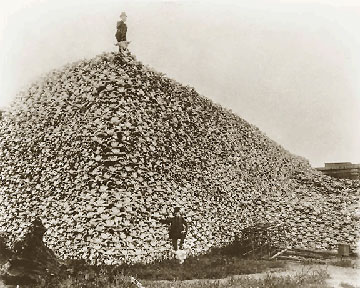
Perhaps if the future bodes well and the Gulf Oil Spill wakes people up to the destructive behavior of what many feel is our way of life the pictures above will have a better correlation, both will be overly massive creatures that were unsustainable in the changing environments of earth.

Sunday, May 30, 2010

BP Oil Spill- Not at all as catastrophic as the extinction of what was the most populace bird in North America.


The headlines like the deadlines are never good, approaching every minute in our media saturated world. We feel stressed slightly by them but let them pass after we have met them, like a anxious wave to a neighbor, whose dog you wish could learn a little obedience. Pass on by, environmentalism should reach a peak with something like this BP Oil Spill but maybe it won't. Maybe we will pass on by with no Silent Spring, no shot in the dark to awaken our sleeping sense. We, the people who buy oil and its products, so solemnify to swear to blame Companies that produce a good that is linked to destruction, rather then ourselves who use and consume the good they provide.

Hmm seems like a stretch, I think maybe it would be too much guilt, growing up catholic was hard enough. But if I lived in the 1800's I wouldn't feel connected to the deaths of coal miners either when I stepped on a train to travel. I would expect that luxury, and I'm not going to purchase and then ride a horse more a week just to travel. Nope not when there is a steam engine train to take me there in less then half the time. But my purchase of the ticket is not linked to the inevitable deaths that happened in the 1800's that happened to men who willingly go down into the earth to dig out material to power my trip.
No lets blame them the companies whose workers die on the job, the companies who spill the oil. It's not my fault if I drive and want energy to fuel my air conditioner. This is America and I do what I want.
Unfortunately people who think of these freedoms to indulge in opulence as an American right, are getting a slimy coastline, their America is stained black with sludge. No matter how Red White and Blue you think our country is, it is not without blame. Our country developed with the destruction of the environment, wildlife dwindled, trees were needed for buildings and fuel and ties of railroads that had to be replaced frequently. The headlines talk about the worst environmental disaster, but they must mean the most rapid, because how does the killing off of the passenger pigeon even compare. Yet that was a slow less media heavy covered topic, the oil spill is not a century in the making unless you see the invention of the combustible engine as the impetus of this disaster.
Sorry lets not blame the people running the engines, just those who provide the fuel to run them.

Speaking of fuel, passenger pigeons helped fuel another atrocity that our country put up with for a long time just like we do our oil consumption, except is seen as a much greater impact of our nation's humanity. Slavery was hard work and protein was important to fuel for it. There was one sure easy source of protein to help fuel your slaves and the developing agrarian economy, the humongous flocks of birds that some written accounts would describe as blocking out the Sun.

Passenger Pigeons. RIP
Good thing your friends the Bison made it through that rough patch of time.


Don't let the headlines fool you, your much bigger of an environmental disaster then the BP oil spill in the Gulf.
Oil goes away like the sweat on my brow when I blast my AC. Genetic specialization it almost impossible to get back.
I guess we'll settle for your cousin the city pigeon, he eats the trash on the street so rats can't get to big.

Wednesday, May 26, 2010

Minneapolis


I have returned from the most populace city in america, and have thought about how cities are stories. There is evolution to them. Where people are, their space upon the grid of gravity that encompasses us, at those specific places, goods and services are sure to follow. Like the ancient crossing paths of camel routes, places where phrases like "he ain't work worth his salt" and "These people are the salt of the earth" originated, cities have becomes homes to people and the spaces between them have been filled by others doing work. From the smallest hydrant to the most giant stadium all space gets filled for a use. We use our own population and the populations outside the city who want to interact with what we do or make.

Space is an interesting concept, Gene Roddenberry called it the final frontier but it is really just more of whats between us rather then a outward space. Cities fill it with materials and along come it's history. The city is made up of the people in it, the Dwellers who live down the block are a good example. When people live they have to eat and sleep to remain living, yes I am including drinking perhaps I should say obtain sustenance rather then eat. I work at a Restaurant, one that provides mighty fine sustenance, I do so because people visiting or living in the city chose not to cook for themselves. Therefore the space of that building is a restaurant, it was once a automobile service station. This is an example of how space evolves and takes different uses, like the old buildings downtown.

The people is where I would like to look today. Most people think of this town and state as Scandinavian 'don't cha know' , it is actually more German then anything according to historical data. But the names of the past, of the forefathers are not the most German or Scandinavian sounding, Pillsbury, Washburn, Loring. That is because the new immigrants filled the spaces of the owners. Workers worked in the mills but along with that had to come auxiliary goods and services. The people creating the things and stuff used in between the mills and their houses. The Swedish Institute is a good example of someone prospering from auxiliary services. As the entrepreneur Swan Turnblad created a Swedish language publishing dynasty and set up house in the mansion on Park Ave. Turns out people wanted to know more about the world, and in days before television it was the newspapers informing the masses. These auxiliary services, are made for the people who make the things that are shipped out of town, the Millers, and nowadays the corporate machines of Target, 3M, General Mills, and Best Buy. The spaces are filled the more people there are, the less gaps in space, for our space becomes prized. I realized in New York our abundance of space here in Minneapolis, and what gorgeous space it is.


Tuesday, April 20, 2010

Earth Day- Week


Pedicab ride on the Greenway this afternoon spotted this woman who was riding her bike back from school. She was showing her students her art bike that she made form MayDay Parade last year. Made from Bamboo and Paper Mache this Bee bike was visually stunning, her helmet called out 'Bee Green'

This earth day on Thursday I should be out in full force, my energy restored after running in the Earth Day Half marathon this past Saturday in St. Cloud. I learned from my first race since High School that perseverance make many things possible, discomfort is temporary, and memories tend to last longer then the aches.


Ride on, biking is serious Bee's-niss, hardy har har.


In the first edition of what I will call Pedicab Pugilism, my attempt to document the battle waged daily on the mean street of Minneapolis by the Murderous machines that brazenly bombard our streets with lethal speed.
This poor cat I shall call Mr Buttons lost the battle of 34th st S and Oakland.
RIP MR BUTTONS, Unknown ---04/19/2010

Thursday, April 8, 2010

Bread, Gardens and Historical Hindsight

Today is Thursday and were it not so cold this morning I would have ventured to Franklin street bakery to buy the dollar loaves of old bread. This is the steal of the city, a deal for all those early risers to take the time to sort through the racks in hopes of scoring a Marble Rye. The bakery is one of those few industries still maintaining a 3rd shift, an economic driver, because everyone needs to eat, and their surplus is our gain. The bread is delicious and a great palate for sweet jam and peanut butter. The owner of aforementioned bakery Wayne Kostroski has been recently awarded a James Beard Humanitarian Award for his work with Taste of the NFL.

The importance of bread has been ingrained in me since my early catholic youth chanting the verse of the Our Father. Give us now our daily bread... but I disagree with the next part of leading us into temptation, sweet baked goods are an amazing production of temptation. The favorite of which is a visit to 'A Baker's Wife', whose goods procure a spot of drool at the side of my mouth. Bread in my opinion should be either heavy, hearty, and nutritious. Or light flaky and full of butter and or sugar . Wonder bread only makes me wonder why people buy an item that can be smashed down into something the of a softball. A good example of this is found in the documentary 'How to cook your life' featuring Edward Brown whose book "Tassajara Bread Book" is considered required reading by many a baker.

The importance of bread as a object of society perseverance dates back to the Roman Era, annona civica, these distributions helped keep to a small degree people from revolt. Hungry people can be driven to extremes, as I have witnessed working at a restaurant how moods shift based on the level of blood sugar. Minneapolis is known historically at the Mill City, it's first baseball team was the Minneapolis Millers who played at the area now occupied by the Metro Transit Building at Nicolette Ave and 31st St, also one of the more stunning building downtown is the old grain exchange building where men used to buy and sell with the fury of those now on Wall Street.
Therefore bread in ingrained, ha ha ha, in our local culture. Food is the second only to water in human survival, we have plenty of water in the land of 10,000 lakes, and bread is readily available but not often at the 99 cent price at Franklin Street Bakery. When exploring the history of food in this fair city, I stumbled across the Minnesota_Starvation_Experiment, where conscientious objectors of WWII were placed into service, to test C rations and the ability to reintroduce food safely to starving POW's.(see interview #1 and #2) The most public institution of starvation prior to David Blaine's starvation over the Thames River in London.
One of the most stunning revelations found in the first interview is the smell of flour coming from the mills making hunger more present.
WWII created a focus on food that hasn't yet been seen. When the fight is thought to be for the freedom of the globe, every action that can help our cause is introduced including growing food. Victory Gardens came of age during war time, grow food to create less strain on our food supply to our troops. One of the oldest still operating victory garden is located in Minneapolis, The Dowling Community Gardens was started as a victory garden. Food is in our blood if you believe you are what you eat.

Further exploration of the effects of WWII on food production will come when I write about the Braceros Program.

Eat up